Contact
- Text: (573) 356-5342
- Call: (573) 356-5342
- Email: [email protected]
Experience the Past, Enjoy the Present
624 E. Capitol Avenue, Jefferson City, Missouri
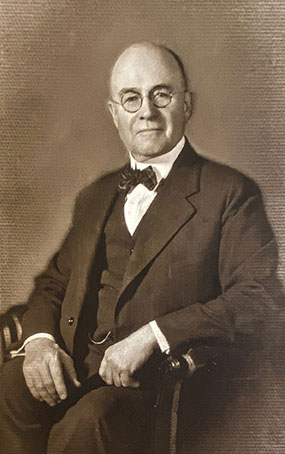
He was a poet, a painter, a shoemaker, an entrepreneur. He was a leader of his church, a music composer, a Kansas sheep farmer, a cotton farmer in southeast Missouri and a miner in southwest Missouri. He was a prison reformer, the owner of a telephone company, a world traveler.
And he lived in this house.
Chapters
1871
He loved to tell people that his boyhood home was the first house consumed by the Great Chicago Fire of 1871 when wind swept the flames from the barn of Patrick and Catherine O'Leary at 137 DeKoven Street to his family home. The barn and the Parker family home (if the story is true) were the first of 17,500 structures destroyed in the fire.
"Big Jim O'Leary, who was two years old when the fire started and grew up to become a 'notorious saloon proprietor and gambling kingpin,' often complained that the 'musty old fake about the cow kicking over the lamp gets me hot under the collar'" and asserted that the fire was caused by spontaneous combustion of newly-harvested hay put in the barn a day earlier. Critics dismiss that story, as well as the cow story, because the summer of 1871 had been "one long and merciless heat wave" that would have thoroughly dried the hay before it was put in the barn, making spontaneous combustion unlikely.
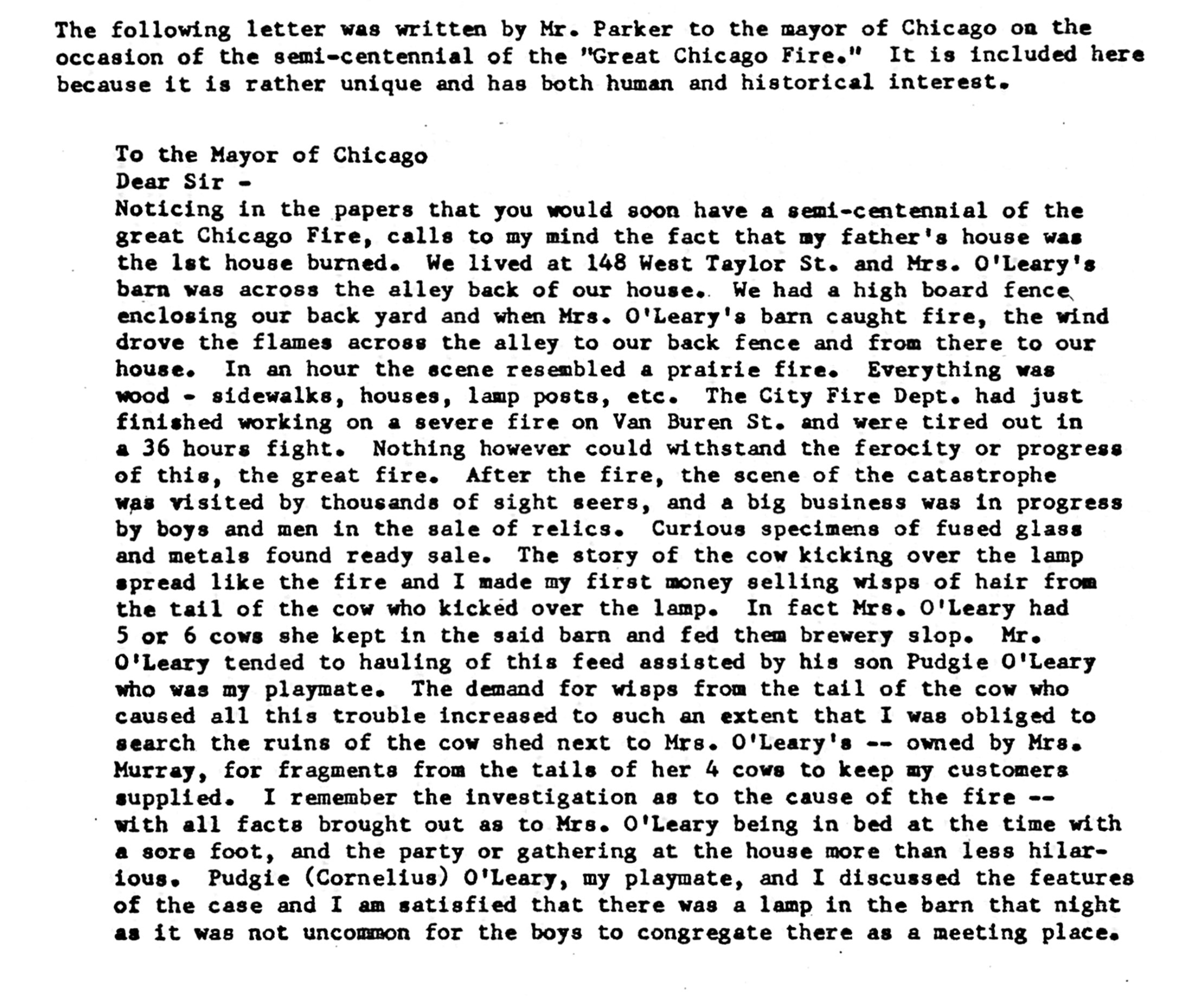
In 1921, as Chicago was preparing to celebrate the centennial of the fire, Parker sent a letter to Mayor "Big Bill" Thompson offering a first-hand account of the fire. He said his home at 148 West Taylor Street was separated from the O'Leary barn by an alley and a tall fence. The story of the cow kicking over the lantern gained strength in the immediate aftermath.
And young Lester Shepard Parker, one day past his eleventh birthday, saw a way to make a profit from the rumor. As visitors combed the ashes for relics to take home as souvenirs, Lester found a way to make his first money. He wrote in his 1921 letter:
"In fact, Mrs. O'Leary had five or six cows which she kept in the small barn and fed them brewery slop…The demand for wisps of the tail of the cow which caused all this trouble increased to such an extent that I was obliged to search the ruins of the cow shed next to Mr. O'Leary's, owned by Mrs. Murray, for fragments from the tails of her four cows to keep my customers supplied."
He maintained the real cause of the fire was Mr. O'Leary's fondness for "red liker" and Mrs. O'Leary's refusal to let him drink in the house. Mr. O'Leary decided to "confine his drinking partys [sic] to the barn."
"Pudge O'Leary (a playmate of young Lester's) and I discussed all the features of the case and I am satisfied that there was a lamp in the barn that night as it was uncommon for the boys to congregate there as a meeting place." Parker suggested the drinking party, denied access to the house, took their gathering to the barn where one thing led to another — the Chicago Fire, in this case.
1860–1890
Parker was born October 7, 1860 in Worcester (they pronounce it "Wooster" there), Massachusetts. His father, George, worked for Phelps, Dodge & Palmer, a boot and shoe manufacturing company. The job took the family to Lexington, Kentucky when Lester was three and then five years later to Chicago. Lester seems to have had a natural penchant for shoe-making — he handmade one when he was nine years old.
When the family retreated to Worcester after the fire, Lester became active in the Massachusetts Natural History Association's ornithology efforts. Lester attended the Worcester Academy as a teenager and graduated in 1879 "with a background in Law" from Baltimore City College, in Maryland.
He was 19 when he moved west to Salina, Kansas where he prospered as a lawyer and as a rancher raising sheep and cattle. It is not clear why he abandoned Salina and moved to St. Paul, Minnesota, to be the foreman of the Kellogg and Johnson shoe manufacturing company. But during that time in Kansas he met Katie Lockard and returned to marry her.
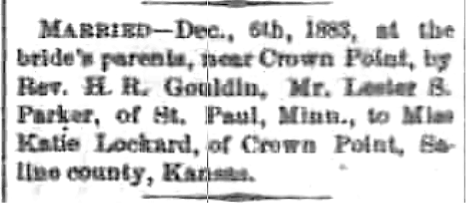
They had a daughter, Gracie, and two sons, Clyde and Dan.
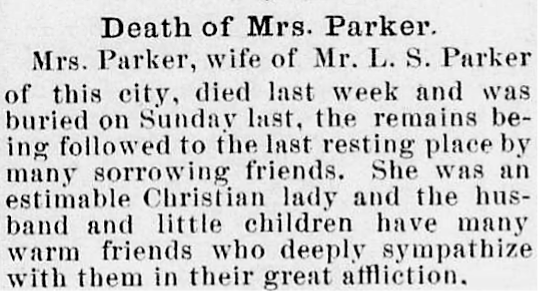
Clyde West Parker (his middle name was his grandmother's maiden name) died at the age of three. When Katie died November 28, 1890, she was buried in the Woodlawn Cemetery in Jefferson City next to Clyde. Grace Ellen Parker (Williams) died in 1955. Daniel Lee Parker died in St. Louis in 1935.
1887–1900
He spent a brief time in Chicago helping the C. M. Henderson & Company organize the Jefferson Shoe Company that began producing shoes within the Missouri State Penitentiary in Jefferson City. Although The Illustrated Sketch Book and Directory of Jefferson City and Cole County, 1900 says Parker moved to Jefferson City in 1895, he and Katie obviously were here much earlier, perhaps as early as 1887. A family birth record shows that their first child, Grace, was born in St. Paul in 1884. Their second child, Clyde, is shown as having been born in Jefferson City in July, 1887 and their third son, Daniel, is shown as being born in 1889, also in Jefferson City.
The earliest mention discovered in the local press of Lester Parker is in the Jefferson City State Republican of May 19, 1892 — a short note in the "Personal" column on page three that Lester had left for a business trip to Boston.
He had achieved some notoriety as a singer, however. He was part of a quartet that performed three songs at the high school commencement exercises in May, 1893: Come Rise With the Lark, Bugle Horn, and Moonlight will Come Again.
The State Republican reported in November of 1893 that the wedding of Frank Ingalls of Chicago and Nelle Foote of Jefferson City was performed at Parker's house.
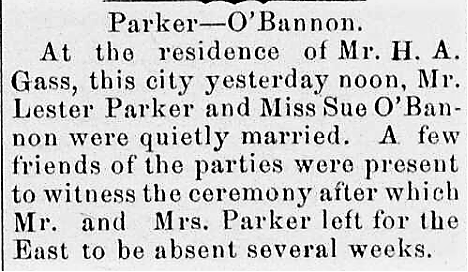
Mary Susan O'Bannon was 27. Parker was 34. She was the daughter of A. S. O'Bannon, who served as a state representative from Cass County for a couple of years during the Civil War. Their first child, Alice, was born the next May and their son, Lester Jr., was born three years later, in 1898. They lived at 124 West McCarty Street. But the second Mrs. Parker died in Chicago from peritonitis on September 3, 1899, leaving Lester with four-year-old Alice and 17-month-old Lester Jr. to care for. She was buried in the family burial ground in Garden City, Missouri. The O'Bannon Homestead is now a National Historic Site.
1900–1919
Henderson, "the oldest shoe company in Chicago" as it was then known, sold its operations early in 1902 to another company. By then, Parker had sold his interest in the company and formed a company of his own, L. S. Parker Boot and Shoe Co., with operations based inside the penitentiary. Longtime Jefferson City newspaperman Lawrence Luetkewitte recalled Parker became known as a "go getter who worked night and day…and had a passion for perfection at anything he undertook."
Shoe making — by Parker, August Priesmeyer (whose A. Priesmeyer Shoes building boasted, "Shoes That Wear"), and Giesecke Boot and Shoe Co. — was just one of the industries behind the walls of the penitentiary. The J. S. Sullivan Saddle Tree Company was one of the world's largest saddle tree manufacturers. The Strauss Harness and Collar Company used convict labor, as did the others, paying the state fifty cents a day for a man's work and forty cents a day for women's work. Thirty-eight of the fifty-four women prisoners stitched shoes.
"The penitentiary was the largest institution of its kind in the United States with just over 2,000 inmates. It was also considered one of the most efficient: costing only 11¢ per day to house and feed each convict. The profit from convict labor was substantial."
— Prison historians Mark Schreiber, Laura Moeller, and Laurie Stout
Parker's company in 1900 employed 230 people with orders of 65,000 pairs of shoes. Not all of those working in those factories were inmates, however. Until a court ruling in 1901 that people younger than 21 could not work alongside convicts, boys as young as twelve sometimes put in eight-hour days six days a week.
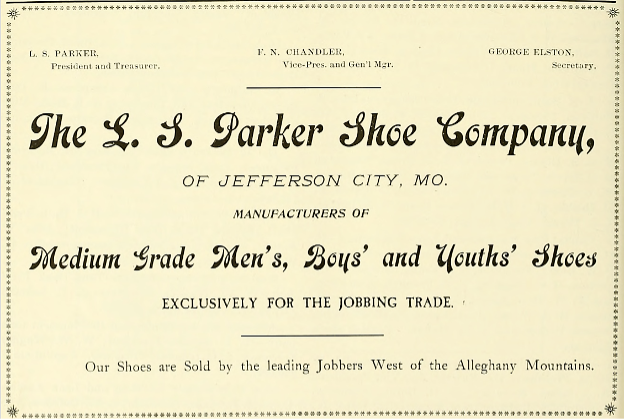
The National Prison Association said in 1905 that the Missouri Penitentiary was the only prison in the United States to more than offset its operational costs by the profits from prison labor. At that time, Parker's shoe and boot company was one of five shoe factories inside the walls, joined by the saddle tree factory, clothing and broom factories, and a binder twine factory that was considered one of the nation's best.
Local historian Gary Kremer records that Parker's factory paid the state of Missouri $52,148.07 for 73,289 days of convict labor.
Parker also was the President of the Economy Stay Company that made shoe stays and often used physically handicapped inmates to make thousands of the wooden pieces that were shipped nationwide. Schreiber recorded the company used 60,000 leather skins every year and needed even more when a special department started making "cowboy chaps."
A friend recalled that Parker made a special pair of shoes for a minister "who had the disconcerting habit of pacing during his sermons." Parker put a stop to the habit by making the minister a pair of shoes that squeaked as he walked.
Parker sold his shoe company in 1913, four years before the prison industrial system was abandoned. But his experience was important to new Governor Frederick D. Gardner, who appointed him as the first superintendent of penitentiary industries, a job considered so important that it paid as much as the governor was paid — $5,000 a year.
In his new job, Parker was responsible for the operations of all of the now prison-run factories. During his term, a new law was passed authorizing salaries of the 1,500-plus inmates working in the factories of five percent of what they would have earned for private factory operators. The penitentiary reported in October, 1919 that its industries had a profit of $61,000. Parker decided that was a good time to retire again.
He spent his remaining years as a First Citizen of the state capital.
1900–1925
Parker might have "retired" from the shoe and boot business, but he was far from ready for the rocking chair. He had established himself as a leading citizen within a few years after arriving and in October, 1903, succeeded former Governor Lon Stephens as President of Central Trust Bank when Stephens moved to St. Louis. He served as bank president until January, 1905, when former Secretary of State Sam B. Cook was named president.
Although he was not one of the original organizers of the Capital City Telephone Company in 1900, he became its President and might have secured its survival against two competitors by buying back all minority shares in the company. By 1923, the company employed two dozen people with a combined payroll of $27,623.88 and "reached the outside world" with the long-distance service of both the Bell and Kinloch Companies.
He was known as a sportsman, an ice skater who was the first person in Jefferson City to perform figure skating, and an excellent golfer. He was known as a "Camel sniffer" by members of the Rotary Club, which he helped found in 1918 — a person who did not smoke but after someone else lit up, would reach for the cigarette and pass it under his nose to smell the aroma.
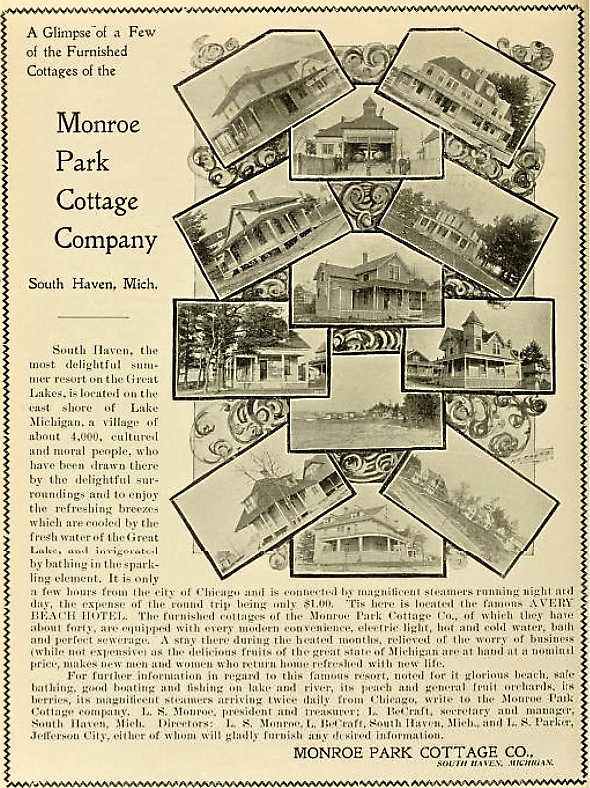
He had lead mining interests in the Joplin area and raised cotton in the Missouri bootheel. He was one of the original promoters of a summer resort on Lake Michigan in South Haven, Michigan. The Monroe Park Cottage Company owned several furnished cottages that were rented during the summer. The area became known as "The Catskills of the Midwest" and in 1900, steamships brought 160,000 visitors across Lake Michigan from Chicago.
Parker and future Jefferson City Mayor C. W. Thomas went into the real estate business together in 1905, buying property known as Cottage Place Park in the block west of Lafayette Street between McCarty and Miller Streets, then the outskirts of the city. Parker and Thomas bought the area for $8,000 and planned to subdivide it into residential lots to meet the high housing demand in Jefferson City.
The Jefferson City Tribune noted, "In the progress of Jefferson City, Mr. Parker has been an important factor. When the first building and loan association was organized, he found time from his large business to help lay the foundation for a movement which has made it possible for Jefferson City to boast of more self-owned homes than any other town its size in the state."
Parker was among the leading citizens who organized the campaign to win passage of a bond issue to put up a new Capitol building after the old one burned in 1911. He was part of the advisory committee to the Capitol Decoration Commission, appointed in 1917 to coordinate interior and exterior decoration of the new building.
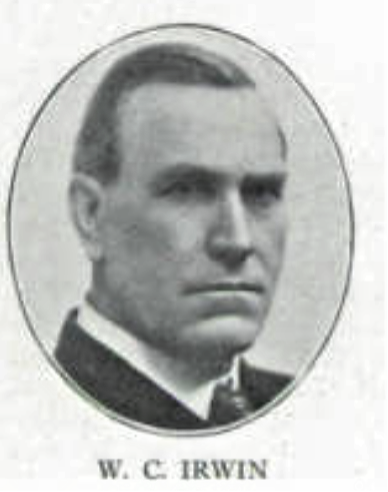
The commission's work was endangered when Cole County Senator William C. Irwin, a tall and intimidating figure, attacked the artwork being installed that told of Missouri's history. Irwin demanded the commissioners be replaced with "businessmen, not artists." Parker considered the works "masterpieces" and his defense of them ultimately led to the establishment of a committee that allowed Irwin to save face while giving him no authority to block installation of any art work.
Lester Parker married for a third time, to Missouri Gordon, in 1901. She went by her nickname "Zue." Their only child, Rachel, was born in 1908, five years after they built their home at the corner of Lafayette and East Main Streets.
Arts & Letters
At some point, the record is not clear, Parker went to Paris to study art at the Academy Colarossi. In his retirement years he was widely respected for his watercolors and oils, many of which focused on the Capitol and on scenes from his travels abroad. He gave 100 pieces of his art collection to the First Baptist Church, in which he was a long-time lay leader as a choir member, trustee, superintendent and teacher of the Sunday School.
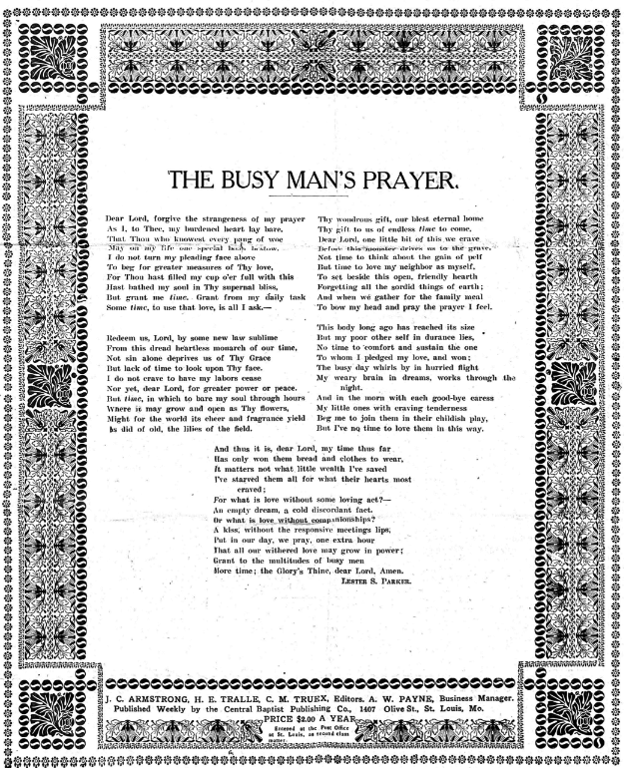
Between his professional activities, his civic involvement, and his family responsibilities, Parker seemed never to be idle. Perhaps that is what motivated him to compose The Busy Man's Prayer, published in The Central Baptist magazine issue of December 12, 1907.
Parker was a year or so past his 50th birthday when he wrote a book that drew on his recollections of Kansas. Nancy McIntyre, a Tale of the Prairies was published in 1912 and sold quickly — one source says it sold 36,000 copies during his lifetime. It was dedicated to "My Wee Daughter, Rachel Ellen Parker."
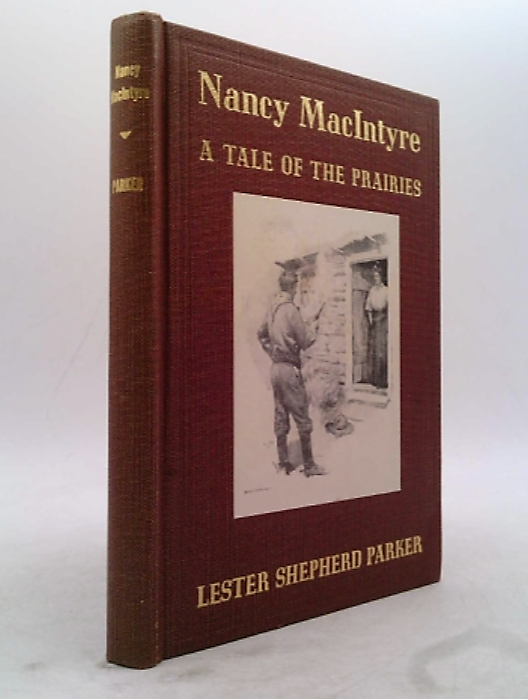
The 107-page book-length poem sold for a dollar and told the love story between a cowboy and the rancher's daughter. It begins with Billy's story:
No use talking, it's perplexing,
Everything don't look the same;
Never had these curious feelin's
Till those MacIntyres came.
Quit my plowing long 'fore dinner,
Didn't hitch my team again;
Spent the day with these new neighbors,
Getting 'quainted with the men.
Talk about the prairie roses!
Purtiest flow'rs in all the world,
But they look like weeds for beauty
When I think of that new girl.
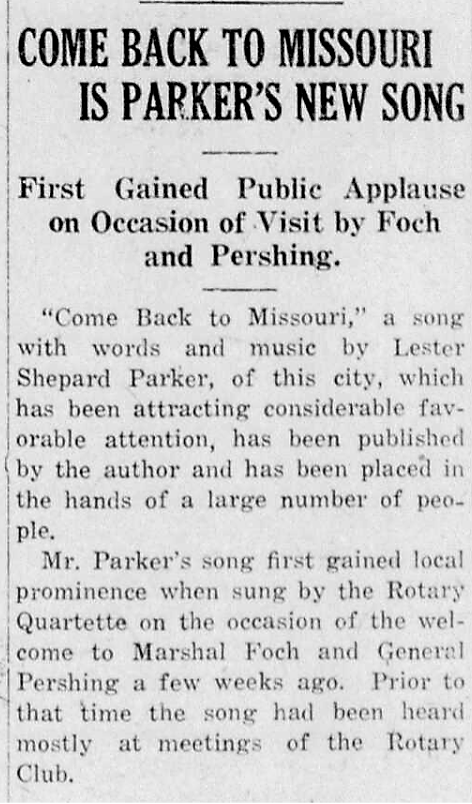
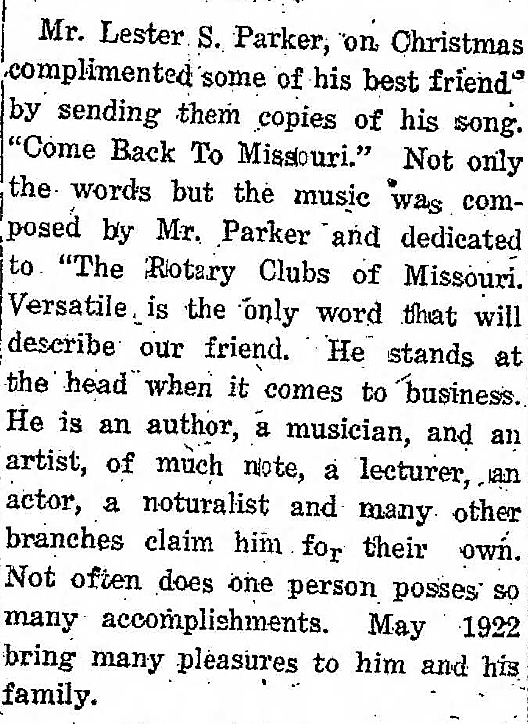
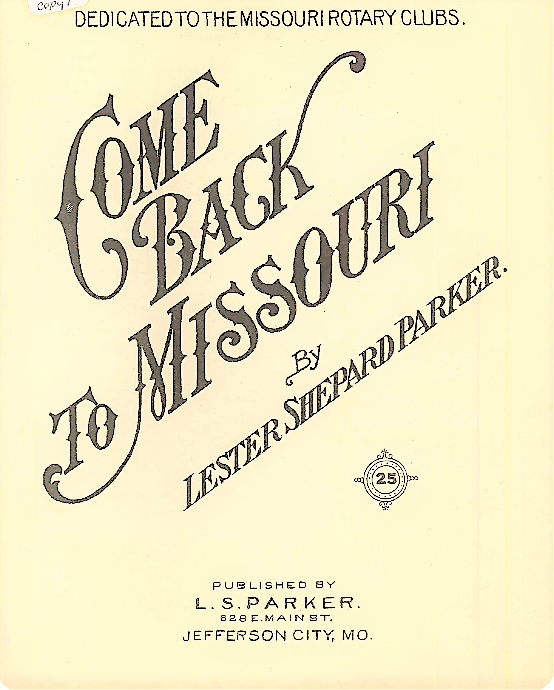
Among other talents, Parker was a composer. He wrote a song, "Come Back My Honey, to Missouri," that was one of many compositions at a time when the Governor was hoping someone would write a state song. Missouri did not have a state song until the late 1940s when the Missouri Waltz, a song that has almost nothing to do with Missouri, was approved by the Missouri General Assembly.
Some of his other songs are examples of a time when open racism was part of life for both whites and blacks: Rag Time Rastus and The Pickaninny's Lullaby, as well as The Whistler and People Will Talk, his most popular song. The Book of Missourians, published in 1906, offered this description of his work at the time.
"But to many, and his most popular song and certainly the most unquestionable hit, full of spice and music, is 'People Will Talk,' a most happy mixture of fact and wit."
People Will Talk
If threadbare your dress, or old fashioned your hat,
someone surely will take notice of that,
And hint rather strongly that you can't pay your way,
But don't get excited whatever they say, for people will talk.
CHORUS:
For the people, all the people will watch you with eyes like a hawk,
Never sleeping,
Ever keeping
Their tongues busy wagging and talk, talk, talk.
If you dress in the fashion, don't think to escape,
For they criticize, then, in a different shape;
You're ahead of your means, or your tailor's unpaid;
But mind your own business there's naught to be made,
For people will talk.
From the Archives
The Parkers were central figures in the social life of Jefferson City, a small town of 9,664 people in 1900 that grew to only 14,490 in 1920. The newspapers still followed the social whirl of the city with short notes in several columns.
Jefferson City Tribune
Big Bridge party at E. J. Miller home. Mrs. Parker scored second highest score. Another column noted Mrs. Parker's sister, Miss Kate Gordon, gave a "chocolate."
Jefferson City Tribune
Dinner at Parker's. Another column reported they had been cast members in a play — Zue plays the Station Matron, Lester is "Mr. Hayseed." The play is at the Jefferson Theatre on the 30th.
JC Weekly Tribune
Parkers head to their summer home in South Haven, Michigan. The newspaper reported their return on September 25.
JC Weekly Tribune
It's now Grandpa Lester. Daughter Grace Williams of Seattle had a daughter.
JC Daily Tribune
Mrs. Parker to entertain members of the United Daughters of the Confederacy at her house this afternoon.
JC Daily Capital News
Art Club heard from Lester about prison industries' reforms. He is described as "always a pleasant speaker."
JC Daily Capital News
"Our Sunday School Sermonette" written by Lester on David and Goliath, likening David to the USA and Goliath to "German Militarism."
JC Daily Tribune
Meeting at Parker home of The Equal Suffrage League.
JC Daily Tribune
Zue is Secretary of City Canteen Committee that meets trains going through town carrying soldiers — serving them "light refreshments and a word of appreciation."
JC Daily Capital News
Art Club meets. Lester "gave one of his splendid talks upon 'Birds'."
JC Daily Capital News
Lester stars in a play presented by the Daughters of the American Revolution, "The Womanless Wedding." Brings down the house.
JC Daily Capital News
Lester refuses to run for mayor.
JC Daily Capital News
Mrs. Parker, a former teacher, was nominated by Democrats to run for the School Board. An account of her victory was published three days later. She was the second woman to serve on the Jefferson City Board of Education.
JC Daily Tribune
Members of the Jefferson City golf team competing in the third round of the InterCity Golf Tournament. Lester was one of ten members of the local team.
JC Daily Capital News
"Lester Parker…who lived near O'Leary barn sends true facts to mayor of Chicago. Claims his home was the first house consumed by the fire…Mr. Parker made his first money selling wisps of hair from the cow that kicked over the lamp."
JC Daily Capital News
JC Daily Capital News
Painting of the Capitol rotunda by Lester is on display in the window of a downtown store. "The picture is attracting considerable attention and is regarded as a work of art by authorities."
JC Daily Capital News
Lester Parker put in charge of the Capital Dedication pageant and program.
JC Daily Capital News
The cornerstone for the new Baptist Church at Capitol Avenue and Monroe Street is laid. Lester Parker spoke about the church's history. His remarks were later placed in the cornerstone.
JC Daily Capital News
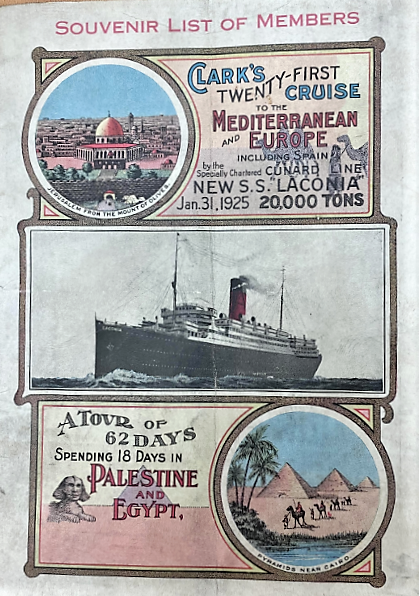
The Parkers are planning a tour of Europe during which Lester will make sketches "illustrating incidents of the early Christian Religion." The illustrations are to be placed in the new Baptist Church. Fire reported in the garage building at the Parker house — damage estimated at $150.
JC Daily Capital News
Lester Parker finishes his new painting, "Religion" — "an allegorical subject depicting the figure of a strong and sinewy man carving out of stone such religious characteristics as truth, faith, love, and charity."
1925
He spent a month in Paris attending the Academie Colarossi and a week in London where he met with artist Frank Brangwyn, who was finishing "eight large decorations" for the Capitol. The trip took him across Europe and the Mediterranean — he arrived at Luxor and saw the tomb of King Tut, described the Zion Movement as unlikely to succeed in his lifetime, and made 41 color sketches along the way.
On the trip home aboard the Mauritania, he met movie cowboy Tom Mix, who he described as "a real genuine fellow although he wore all his western regalia, probably at the request of his manager." Mix entertained the ship's company one night and remarked, "Folks, I'm just a horseman and when you take my horse away and put me in the middle of the Atlantic Ocean, what can I do?"
The newspaper said Parker enjoyed the trip but was glad to be home. He had written a poem to commemorate the return, read at a Rotary Club meeting:
On Coming Home
I have just toured the continents and sailed the seven seas.
I have gone the length of Egypt with her blooming flies and fleas.
Her history and monuments appall my sense of time.
And fill my mind with conjurings I now express in rhyme.
Her ancient tombs inspire me but I'll tell you what's the rub.
I want to see that grander site, my hometown country club.
I went all through the Holy Land
And sailed Lake Galilee.
I saw the sacred Jordan and its journey to the sea.
While a hundred solemn fancies came to me with every thought
That the ground beneath my feet was where the Master walked and taught,
All those adventures only come to those who roam,
And while that's me, just now I say, "I want to be back home."
I stayed in Villefranche, Rome, and Nice, of balmy clime,
And saw the Spaniard, Greek and Turk reach out for my last dime.
I heard cathedral organs of the most melodious tone,
And opera and cabaret in every Paris zone.
I'll tell you what is gripping me relentlessly and hard.
I want to hear the mocking bird that sings in my back yard.
I want to see my neighbors' dog and let him in the door,
And tell him that I've come back home to hear him bark once more.
There are some very happy things that come to those who roam.
But as for me, the best is this, "Just let me get back home."
He later displayed about forty paintings he had made while on the trip. His shipboard lecture on the "Hen Pecked Husbands Protective League," delivered on the crossing home, earned him "a dozen invitations" to repeat it upon his return.
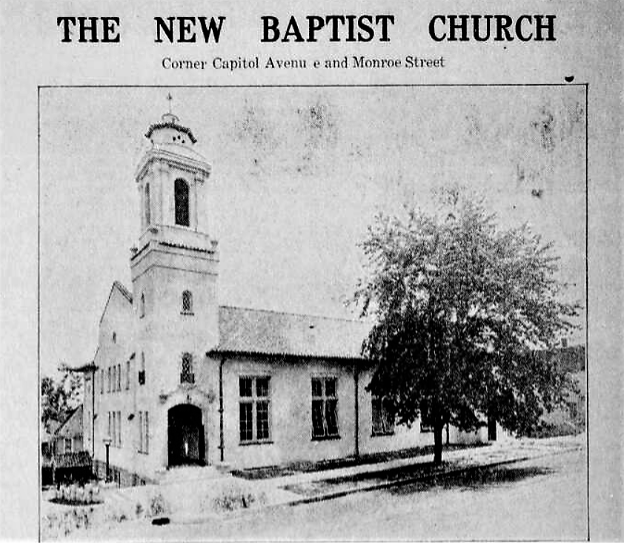
Before they left for Europe, the new Baptist Church had held its first service. Parker had been the chairman of the decorations committee and placed several of his paintings there. After the trip, the Parkers headed to Rochester, Minnesota for what was described as "a visit" — but the Daily Capital News revealed on July 18 that Parker had had successful surgery at the Mayo Brothers Clinic the day before. He had suffered from stomach ulcers for some time.
July 25, 1925
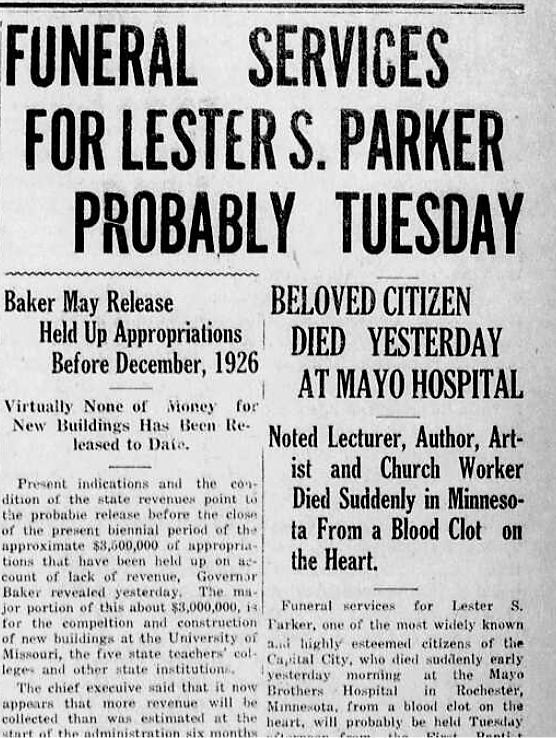
On Victory Sunday morning, July 26, 1925 — the day the Baptist Church had organized a week-long celebration to raise funds for the church debt, with special lyrics composed by Parker for six familiar hymns — members of the church and citizens throughout Jefferson City opened the Daily Capital News to find a headline announcing his death.
"The end yesterday morning came unexpectedly and at a time when Mr. Parker was apparently resting easy." Mayor Cecil W. Thomas said, "The loss is a great one to Jefferson City, far too great to be measured by words."
"No man in this city was more loved, admired, and trusted. Generous in sympathy, courageous in trial, devoted to his family and friends, true to his God, faithful in his stewardship, his place will be hard to fill, and the community will not look upon his like again."
— Jefferson City Daily Capital News
Thousands of people attended the visitation at the Baptist Church. Hugh Stephens, one of his closest friends, said in his eulogy, "He was a genius. Jefferson City was fortunate to have had him."
"To him is due the credit for having rescued from defeat the movement to decorate the state capitol when that work had just started and was about to be given up. Single-handed he began a thorough study of the great purpose and aim of its decorations, and as a result we have in this city a building on which there has been expended for art nearly a million dollars, making it perhaps the greatest public building in that respect, within the bounds of the United States, except the Library of Congress."
— Hugh Stephens, eulogy
Civic clubs and the City Council adopted resolutions in his memory. The Kiwanis Club said, "No man in Jefferson City ever filled a larger place in the life and affections of her people or did more for her civic welfare than he. He was a nobleman in the truest meaning of the word."
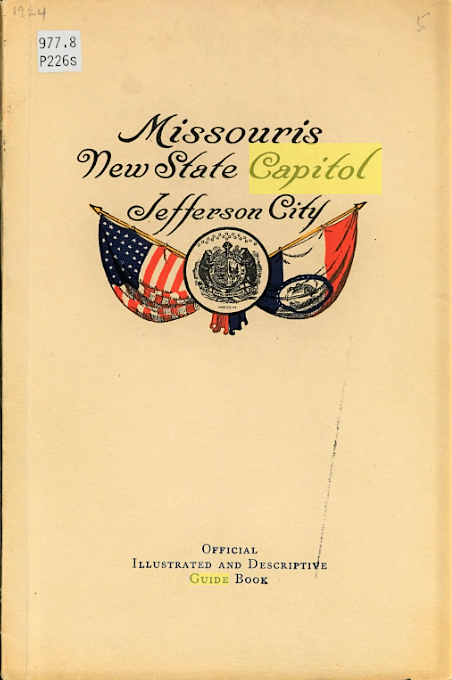
A year before his death, Parker had published a 72-page guidebook to the new Capitol building and to the artwork that had been installed by then.
A Parker portrait by Springfield artist Ralph Chesley Ott was presented to the church to hang in the Lester Parker Memorial Room. The Parker paintings survived a church fire in the 1980s because they had been put in storage. One of his works remains on display at the church today. His son, Lester Parker Jr., donated two of his works to the Cole County Historical Society. A handful of his paintings are at the State Historical Society in Columbia.
Zue and Rachel continued to be socially prominent in Jefferson City for years after. She and Rachel are buried next to Lester in Riverview Cemetery.
Then & Now
The buildings Lester Parker used inside the penitentiary are long gone. The only building remaining in Jefferson City with a tangible connection to Lester S. Parker is this house at 624 East Capitol Avenue — into which he and Zue moved in 1905.
Main Street, in front of the house, was given its present name after the 1911 fire destroyed the state's 1840 Capitol. Today West Capitol Avenue has replaced West Main for two blocks west of Jefferson Street. The Parker house and the building that had been their servants' quarters — now christened "Parker's Place" by new owners Jason Jett and Kevin Callaway — was added to the National Register of Historic Places in 2000.
"The only building remaining in Jefferson City with a tangible connection to Lester Parker is this house."